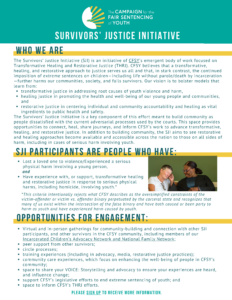
The Survivors Justice Initiative (SJI)

The Survivors Justice Initiative (SJI) is a cornerstone of the Campaign for the Fair Sentencing of Youth’s work in Transformative Healing and Restorative Justice (THRJ).

We believe that extreme sentences for children—including life without parole—fail survivors and further harm our communities. Our vision is to bolster justice models that address the root causes of violence, promote the health of our young people, and center accountability and healing as a vital ingredient to public safety.

Survivors have long been a part of this work and our community. In response to their needs, SJI provides a space for survivors of youth harm who are dissatisfied with the current adversarial processes to connect, heal, and inform CFSY’s work. SJI aims to see transformative, healing, and restorative approaches become available across the nation to those on all sides of harm, including in cases of serious harm involving youth.

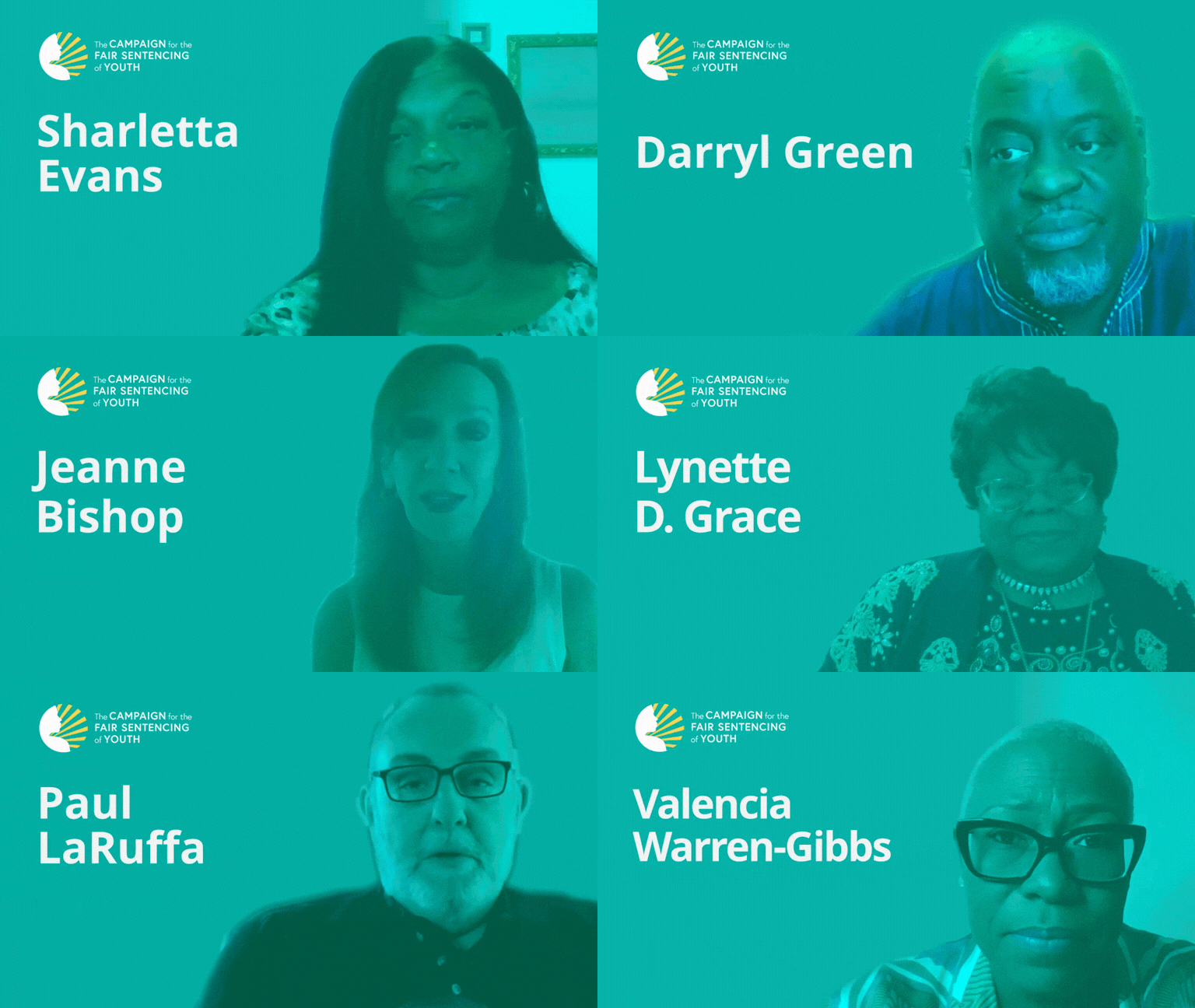
Hear from the survivors shaping this community


What SJI Participants Say

“As the father of a homicide victim and a formerly incarcerated person, this work is extremely personal. Restorative, transformative, and healing justice allowed me to heal and help others do the same.”

–Rev. Dr. Chris Kimmenez (PA) | Executive Director, Healing Communities PA

What SJI Participants Say

“Healing can only begin when we are honest about the harm. When we learn why harm happened, we have a better opportunity to create preventative measures and lasting systemic change.”

–Tiffiney L. Hall (PA) | Founder, PosiTiff

What SJI Participants Say

“I have experienced healing and reconciliation through meeting the person who killed my family members. I want others to know peace is possible.”

–Jeanne Bishop (IL) | Board of Directors, Restore Justice Illinois

What SJI Participants Say

“Restorative dialogues have been a catalyst for my personal healing. I share my experience to give hope to those still seeking comfort, closure, and restoration to know that there is such a thing.”

–Sharletta C. Evans (CO) | Family Member Survivor

What SJI Participants Say

“There are so many needs that survivors have after harm that our criminal legal system cannot meet. Survivors, families and communities deserve healing. And this work can interrupt cycles of harm.”

–Rebecca Weiker (CA) | Co-Director, The Mend Collaborative

What SJI Participants Say

“As a crime survivor, I strongly believe that restorative dialogues should be available to all individuals and communities impacted by serious harm. Restorative processes create necessary space for accountability while providing the support all parties need to foster understanding and personal growth. These dialogues are vital for youth at such a critical emotional and developmental stage in their lives.”

–Enako Jefferson (CA) | Crime Survivors Speak

What SJI Participants Say

“In my Christian faith, we are instructed to forgive. Meeting with the person who caused me harm allowed me to ask the questions I needed for peace and opened a new avenue for my advocacy.”

–Lynette D. Grace (OH) | CFSY Advocate

What SJI Participants Say

“Youth who end up in these situations usually are there because society failed to raise and protect them. Restorative, transformative, and healing justice gets to the root causes of harm and can prevent it from happening again.”

–Rev. Dr. Chris Kimmenez (PA) | Executive Director, Healing Communities PA

What SJI Participants Say

“I have chosen transformative healing and restorative practices because I refuse to let violence, grief, and trauma define who I become or how I show up in the world. Through my healing, I honor my niece’s life and break the cycle of pain by choosing faith, truth, and restoration over bitterness. This work allows me to turn what was meant for harm into purpose, creating space for healing not only for myself, but for my community.”

-Isa Farrington Nichols (NC) | Jireh-Shalom Foundation

What SJI Participants Say

“Serious harm affects everyone, not just the person directly injured. When harm is caused by youth, restorative dialogue creates space for accountability, truth, healing, and the possibility of growth, while still honoring the pain of those impacted. True healing requires accountability, compassion, and opportunities for restoration.”

-Valencia Warren-Gibbs (MI) | CFSY Advocate

What SJI Participants Say

“I’ve seen unaddressed harm impact individuals and families, and I’ve seen what becomes possible when young people are given genuine second chances. When we create space for dialogue, we give everyone involved the opportunity to be heard, to repair harm, and to move forward in a way that breaks cycles rather than reinforces them.”

-Tasreen Khamisa (CA) | CEO, Tariq Khamisa Foundation

What SJI Participants Say

“The current punishment system is designed to make survivors believe there is nothing redemptive in those who caused harm. This work is an opportunity to do the healing work I have been doing for the last decade in community: to journey with survivors toward real healing.”

-ayoola mitchell (AL) | National Healing Collective

What SJI Participants Say

“If my life can be transformed and healed through restorative justice, I am a firm believer that this can happen for anyone willing to take the chance. We must allow for that option.”

-Mrs. D (CO) | Denver DA Office of Diversion

What SJI Participants Say

“No one should be forever defined by the worst thing they have done. I believe in the capacity of people to change and grow and transform.”

-Rebecca Weiker (CA) | Co-Director, The Mend Collaborative

What SJI Participants Say

“I believe restorative dialogues should be available to all sides of serious harm—especially when youth are involved—because harm does not occur in isolation, and healing cannot either. Restorative spaces create the opportunity for truth-telling, accountability, and humanization, allowing those harmed to be heard and those who caused harm to fully understand the impact of their actions.”

-Isa Farrington Nichols (NC) | Jireh-Shalom Foundation

What SJI Participants Say

“Everyone is more than the worst thing they have ever done. All people, especially young people, have the capacity for transformation.”

–Jeanne Bishop (IL) | Board of Directors, Restore Justice Illinois

User-add User-add

SJI Participants are:

Individuals who have lost a loved one to violence or experienced serious physical harm involving a young person, and who support transformative healing and restorative justice in response to those harms.

Note: We recognize that many of us exist at the intersection of both having experienced harm and, at times, having caused harm as youth. We welcome SJI participants at this intersection.
Want to learn more?

If you are interested in learning more or joining the Survivors’ Justice Initiative, please fill out this form.

Opportunities for Engagement

  • Community & Connection: Virtual and in-person gatherings with SJI, the Incarcerated Children’s Advocacy Network (ICAN), and the National Family Network (NFN).

  • Peer Support: Circle processes and community care experiences.

  • Training & Advocacy: Experience in media, storytelling, and legislative efforts.

  • Internal Influence: Space to inform and shape CFSY’s efforts.

Book-open Book-open

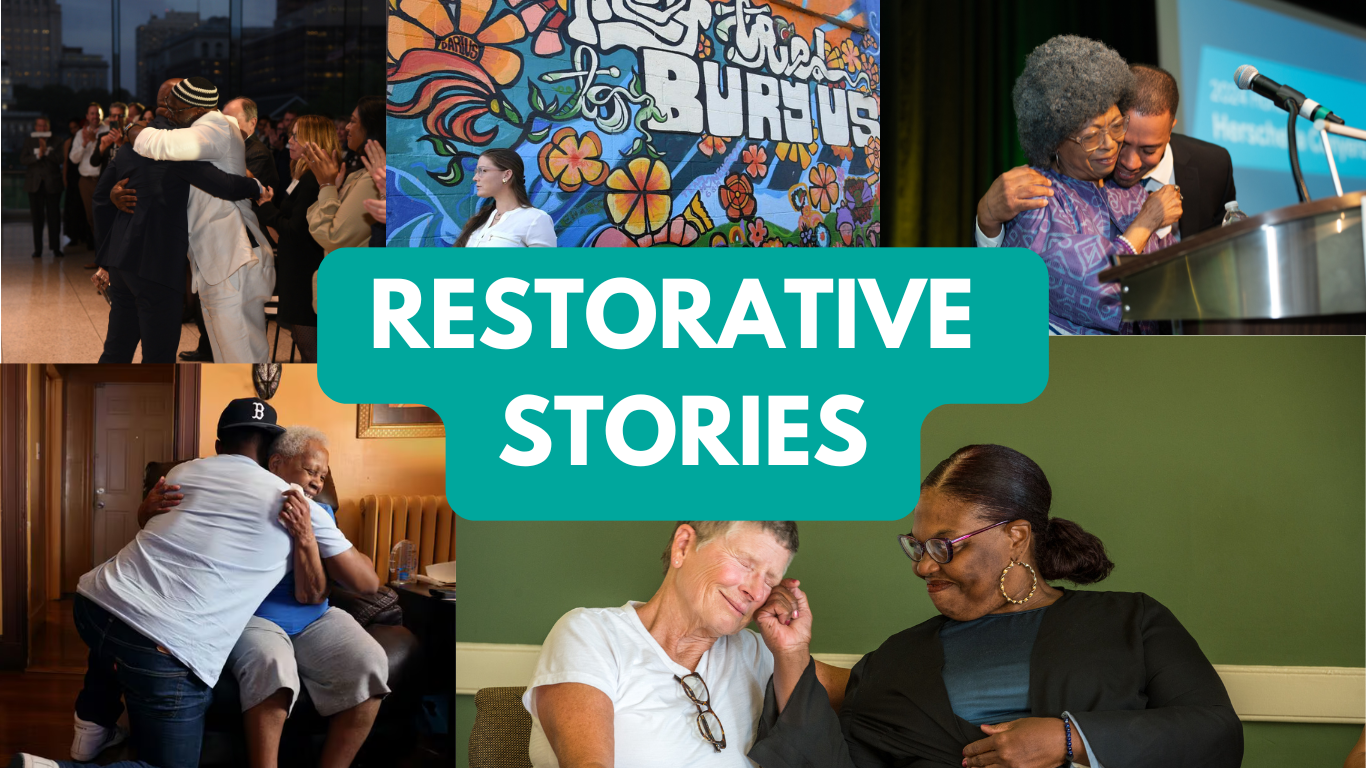
Restorative Stories

These are the stories of those impacted by youth violence and the extreme sentencing of youth who have found healing through restorative justice. Survivors. Families. Communities. Condemned children.

Their testimonies can serve as a beacon of hope for understanding ways to address harm that recognize the potential and promise that exists in every child. Read these Restorative Stories.

Doc-text Doc-text

New Report!

Not a Monolith: Perspectives from Survivors of Youth Violence highlights the experiences and perspectives of survivors of youth violence and people who have lost loved ones to youth violence. This report aims to reflect the voices and lived experiences of many survivors in our NFN and ICAN communities, while honoring the broader diversity of perspectives survivors hold about justice, safety, and healing.